Diamond Guide
Your complete guide to understanding diamonds. Learn, compare and make informed decisions with confidence.
Welcome to the Diamond Guide
Whether you’re new to diamonds or looking to deepen your knowledge, this guide covers everything you need to know about diamond quality, shapes, grading, GIA documentation and much more.

Learn how Cut, Color, Clarity and Carat weight determine a diamond’s quality and value.
Explore →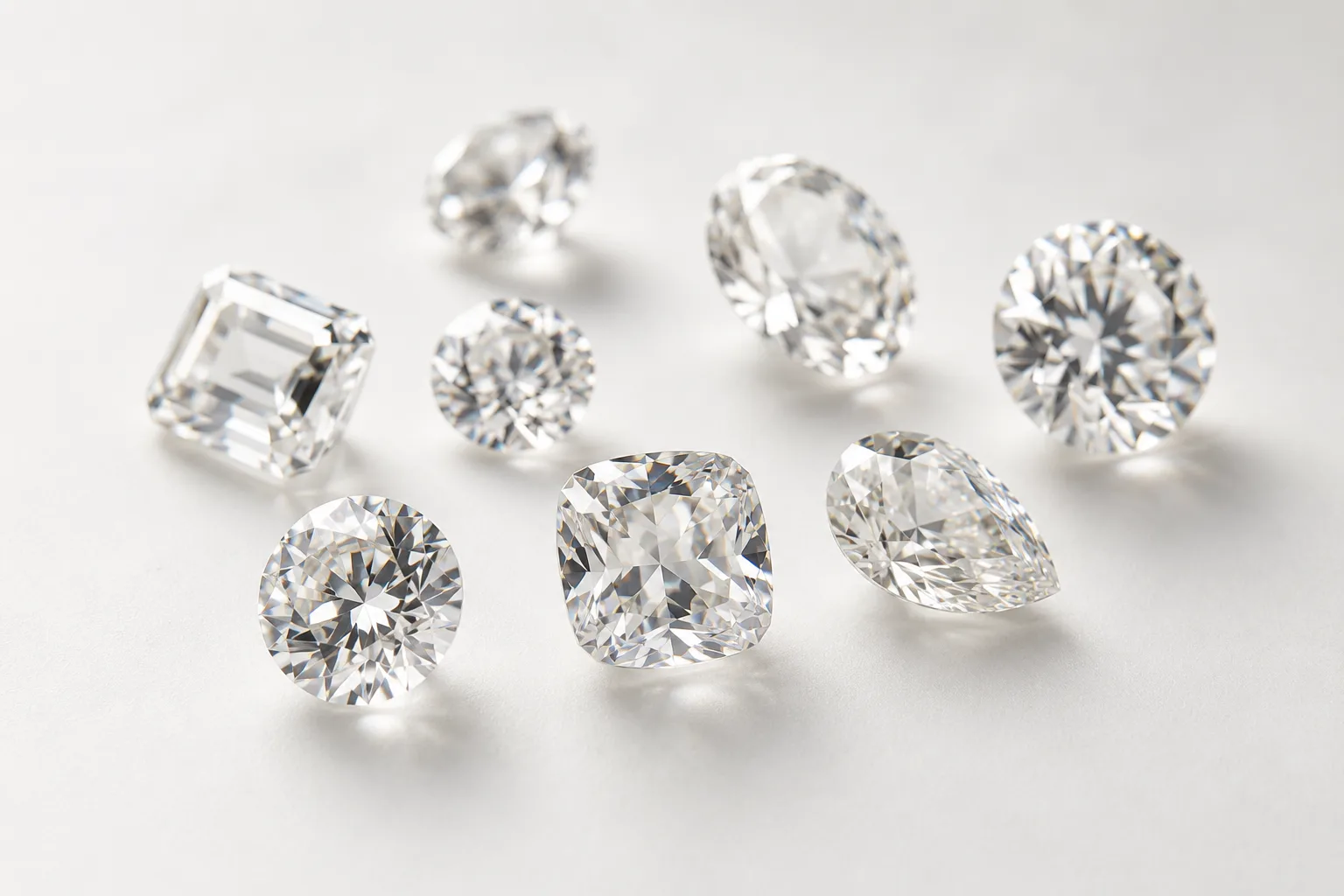
Discover popular diamond shapes and their unique characteristics to find your perfect match.
Explore →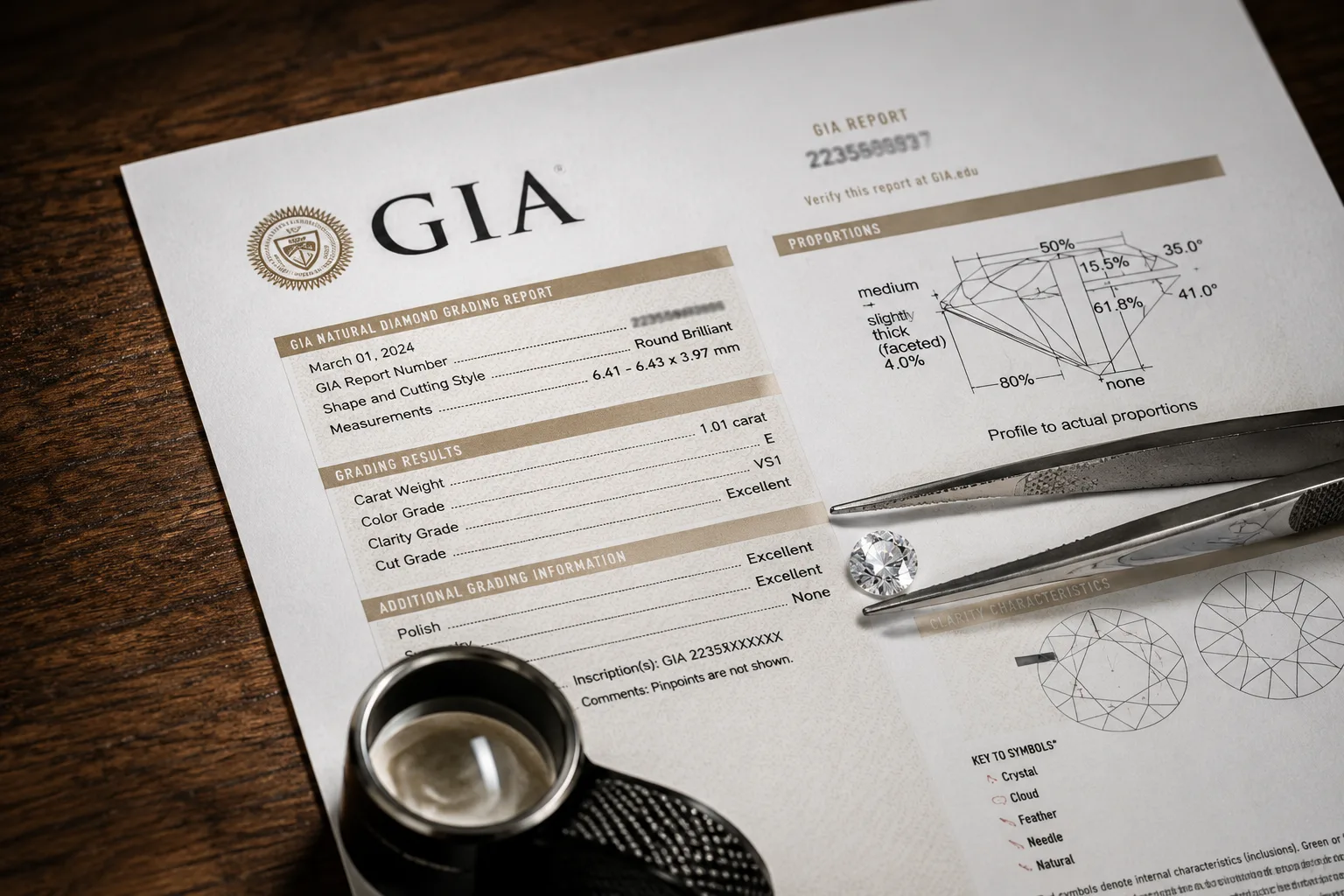
Understand GIA diamond grading reports and the quality characteristics they document.
Explore →
The most important of the 4Cs. Explore how cut affects brilliance, sparkle and fire.
Explore →
From D (colorless) to Z (light yellow). Learn how color impacts the beauty and value.
Explore →
The 4Cs of Natural Diamond Quality
Cut, color, clarity and carat weight describe different qualities of a diamond. They should be considered together: carat is a measure of weight, while cut, color and clarity describe other aspects of the stone. Two diamonds with the same carat weight can differ in appearance and grading.
Diamond Cut
Cut describes the diamond’s proportions, facet arrangement and craftsmanship, which affect how it handles light. GIA assigns an overall cut grade to standard round brilliant diamonds; fancy shapes are evaluated through their report details and visual characteristics rather than that same overall cut-grade scale.
Diamond Color
For colorless-to-light-yellow diamonds, the GIA D-to-Z scale describes increasing color presence from D toward Z. Shape, size and viewing conditions can influence how color is perceived, so comparisons are most useful when stones are considered in a consistent setting.
Diamond Clarity
Clarity grading considers internal inclusions and external blemishes under 10× magnification. The grade reflects their size, number, position, nature and visibility; a report helps buyers compare the documented characteristics of individual stones.
Carat Weight
Carat measures weight, not face-up dimensions. One carat equals 0.20 grams, and a diamond’s visible spread also depends on its shape and proportions. Compare measurements as well as carat weight when matching stones.
Diamond Shapes
Shape describes a diamond’s outline, such as round, oval, emerald, pear or marquise. It is distinct from cut quality. For fancy shapes, buyers often compare outline, symmetry, proportions and face-up appearance because a single standardized overall cut grade is not available across every shape.
Explore round natural diamonds · Explore fancy shapes · Explore matched pairs
For documented grading information, see GIA-documented natural diamonds.
Knowledge Is Confidence
The more you know, the better your decisions.
Use this guide as your trusted resource for all things diamonds.